Laundry in Bali: What I Learned About Kiloan Services, Packing Light, and Staying Fresh as a Tourist
My husband and I have a rule when it comes to travel: warm and tropical is out. We already live in the Philippines. Why pay to fly somewhere that feels exactly like home? So our default destinations are South Korea and Japan. Cool air. Efficient transit. The quiet satisfaction of a very organized public transport system.
Bali, though, is the exception.
It has been the exception since we first visited in February 2020, just days before the world shut down. It is the one tropical destination my husband will enthusiastically book again, and I honestly feel the same way. There is something about the island (the temples, the terraced rice fields, the food, the people) that makes even someone who usually prefers 10°C mornings want to come back. I have also been to Jakarta separately, visiting a musician friend there, so Indonesia was already familiar to me. But Bali is in its own category entirely.
The Itinerary (and What We Didn't Account For)
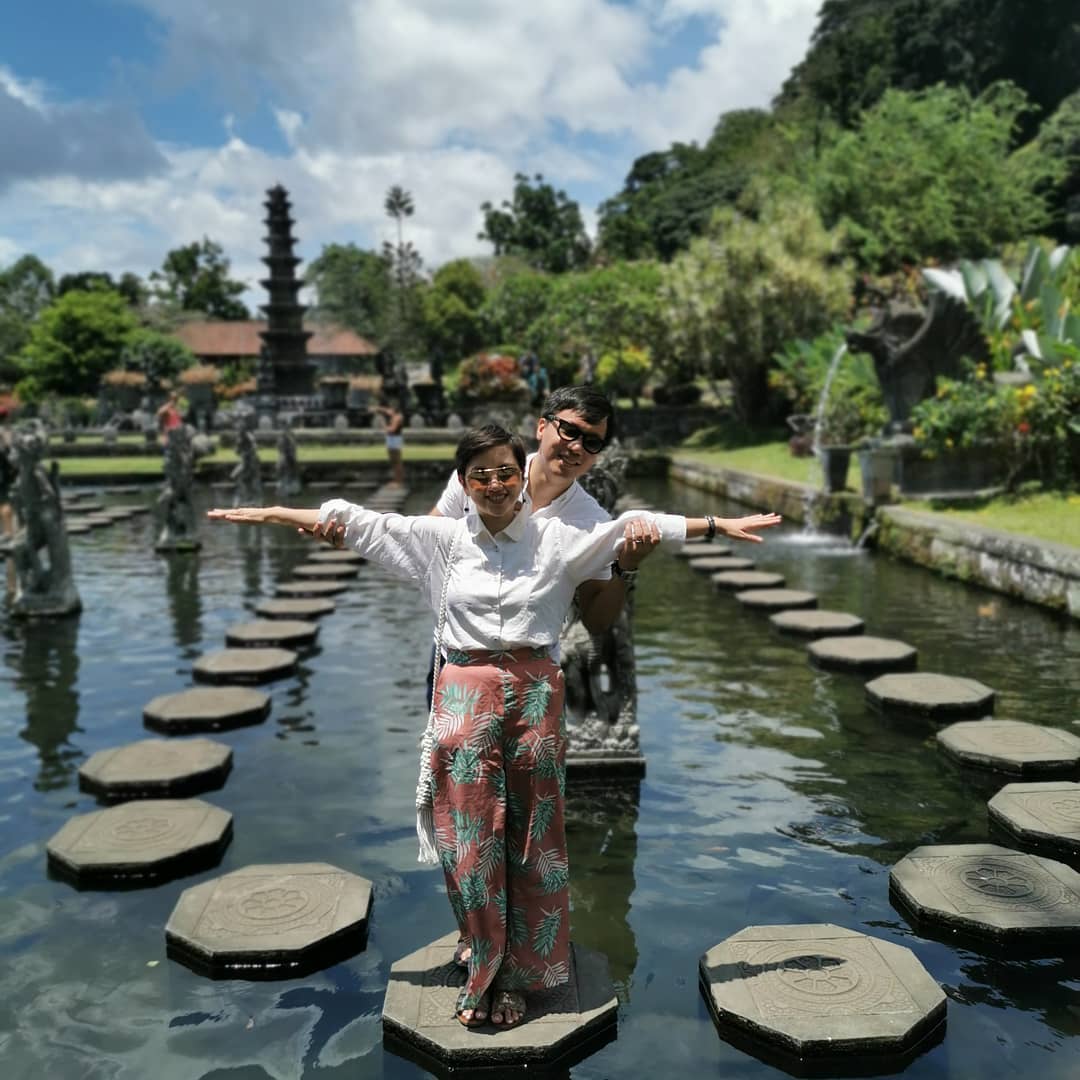
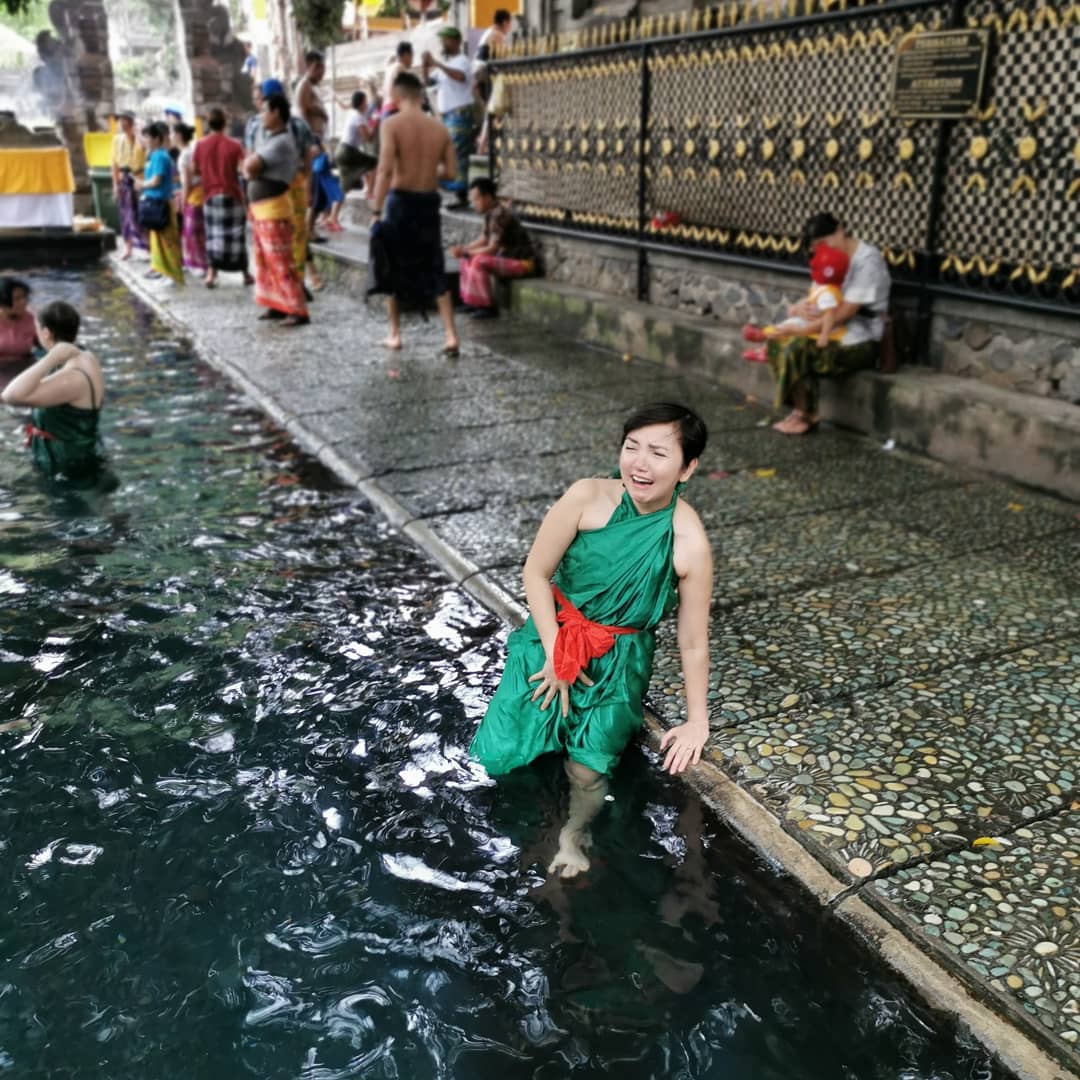
We landed at Ngurah Rai International Airport and made our way to Ubud first, then worked toward Seminyak for the back half of the trip. In between, we crammed in as much as we could. The Sacred Monkey Forest in Ubud. Tirta Gangga Water Palace in the east, where the stepping stones across the ornamental pools look exactly as beautiful as every photo suggests. Pura Tirta Empul, the holy spring temple in Tampaksiring, where pilgrims and visitors alike wade into the purification pools. And several warung stops specifically for babi guling, Balinese spit-roasted pork, which we had been told to seek out and absolutely did.
Because we wanted to cover as much ground as possible, we rented a private vehicle with a driver. At the time it was around USD $20 to $25 per day, fuel and all. If you're visiting Bali and haven't considered this, I genuinely recommend it. It removes the logistics pressure entirely and lets you say yes to stops you would otherwise skip. We made the most of it.

What we didn't account for was the heat. February is technically one of Bali's cooler, wetter months. We expected something like Manila in January: warm but manageable, maybe a breeze. What we got was full tropical humidity from the moment we stepped outside each morning. Packing light, which had felt like a smart and efficient decision at the departure gate, started looking a lot less smart somewhere around day three.
Running Out of Clothes (and the Laundry Decision)
When you travel light and the weather is hotter than expected, you exhaust your wardrobe faster than your itinerary allows. We had packed with the intention of doing some hand-washing in the hotel. My usual solution, with my husband serving as a reluctant co-participant in the drying phase. He did not love this system. Bali in February, though, makes hand-drying slower than you'd hope when the air itself is saturated.
By the time we reached Seminyak, the math was simple: we either bought new clothes, or we found a laundry shop. We had promised ourselves we would maximize every hour in Bali, which ruled out an afternoon of shopping for things we didn't need and couldn't easily fit in a bag we were already overpacking mentally.
Laundry it was.
Discovering Kiloan: the Bali Laundry System Explained
What surprised us first was how easy laundry shops were to find.
The word “laundry” is used widely and literally across Bali. You will see it on signs in English, and it is immediately understood. But you will also see another word: kiloan. For us, this was immediately familiar. In Filipino, we say kilohan, which means charging by the kilogram. Same concept, slightly different spelling. It felt oddly like home.
The kiloan model is the standard across most of Bali and Indonesia more broadly. You bring your bag, they weigh it on a scale, you agree on a price per kilogram, and you pick everything up in a few hours or the next morning. Pricing is transparent and proportional. No flat rates that penalize a light load, no guesswork. At the time of our visit, rates in tourist areas ranged roughly from IDR 5,000 to IDR 15,000 per kilogram depending on the service level and location (around ₱15 to ₱45, or USD $0.30 to $0.90 at the time). Even the higher end of that range is very affordable by any standard.
The language barrier, while present in 2020, was not the obstacle we feared. The Balinese people we encountered throughout the trip were warm and patient. In Seminyak particularly, a more tourist-oriented area, the whole transaction was workable even with very limited shared vocabulary: weigh, agree on price, confirm the return time, pay. Numbers on a phone screen bridge a lot of gaps.
Choosing the Right Laundry Shop as a Tourist
Coming from the Philippines, where laundry shops are also everywhere and we know what to look for, we had standards. We deliberately aimed for mid-to-premium shops rather than the cheapest option on the block, and I'd recommend the same to anyone traveling with clothes they care about.
Better shops wash colors separately from whites, use gentler detergents rather than harsh industrial powder, and treat your load as its own batch rather than mixing it in with everyone else's. When you're traveling with a limited wardrobe and cannot easily replace anything, this matters more than it would at home.
In Seminyak, finding shops with solid reviews was not difficult. The area is built around visitors and long-term expats, and the service quality reflects that. We did a quick Google Maps search, checked a few reviews (specifically looking for comments about turnaround time, item handling, and whether anything had ever gone missing), and walked into a shop we felt comfortable with.
We opted for full-service rather than self-service, partly because self-service laundromats in Bali were not as standardized in 2020 as they have reportedly since become, and partly because on vacation, your time is the resource you are protecting most. Full-service meant we handed over the problem entirely and walked out to keep seeing Bali.
The Result: That Distinct Bali Scent
When we picked up our clothes the next morning, they came back clean, neatly folded, and exactly as expected. What we did not expect was the scent.
I cannot tell you precisely what product or combination of fabric softener and detergent Balinese laundry shops use, but there is a distinct smell to clothes washed in Bali. Floral, warm, clean in a way that does not read as synthetic. I have never quite encountered it from laundry done in the Philippines. My husband noticed it too, unprompted, which is notable because he does not generally comment on laundry. We ended up slightly delaying unpacking those clothes when we got home, just to keep the scent around a little longer.
It is a small thing. But it is the kind of sensory detail that stays with you from a trip and makes the whole experience feel more complete.
Practical Tips for Tourists Doing Laundry in Bali
If you're planning a trip and wondering how to handle laundry, here is what we actually learned from doing it:
- →Pack light and plan for laundry. Bali's system is reliable, affordable, and everywhere. There is no reason to overpack. Build in one laundry stop per four to five days and you will travel lighter and more comfortably.
- →Look for “kiloan” signs. This is per-kilogram pricing, which is the standard model. Ask the rate per kilo before handing anything over. In tourist areas, expect IDR 7,000 to 15,000 per kg. Honest shops will tell you the exact weight before you commit.
- →Choose full-service in tourist areas. Seminyak, Ubud, Kuta, and Canggu all have solid full-service options. Same-day and next-morning turnarounds are common. Hand over the bag before heading out for the day and pick it up when you return.
- →Go mid-to-premium for clothes you care about. Ask if they wash colors separately from whites. A good shop will say yes without hesitation. A shop that looks confused by the question is a shop to skip.
- →Don't overthink the language barrier. In any tourist-facing area of Bali, the laundry transaction is simple and practiced. Numbers, a phone, and a bit of patience cover most of the gap.
- →Check Google reviews before you walk in. Thirty seconds of reading tells you a lot: turnaround reliability, whether items have gone missing, how they handle delicates. Look for consistent recent reviews, not just a high overall score.
The Bottom Line
Bali's laundry scene works better than expected. The kiloan model is easy to understand even as a first-time visitor, the shops are everywhere in tourist areas, and the price-to-quality ratio is genuinely great, even at the mid-to-premium end, compared to what you'd pay elsewhere in the region.
We did go back, by the way. After four years away, we returned to Bali in late 2024, our first trip since the pandemic changed everything. A lot had shifted. Some things were exactly the same. I am saving that story for a separate post, but I will say this: we packed lighter the second time, we planned for kiloan from the start, and yes, the scent was still there.
If you are planning a trip to Bali or anywhere in Indonesia and want to find laundry shops near where you're staying, you can browse LaundryAtlas Indonesia listings to see what's verified in your area before you travel.